
Tech Explained | Tracking vs Fixed Mounts: Which is Right for Your Solar Plant?
In PV plant construction, the choice of mounting systems is a critical decision that directly impacts energy yield, ROI, and long-term O&M costs. As the foundational "skeleton" of a solar project, mounts must not only reliably support modules for decades but also be engineered to adapt to environmental conditions for maximum financial returns. This guide, backed by Grace Solar's 17+ years and 48GW of global deployment expertise, dives deep into the fixed vs. tracking debate to help you make an informed choice.
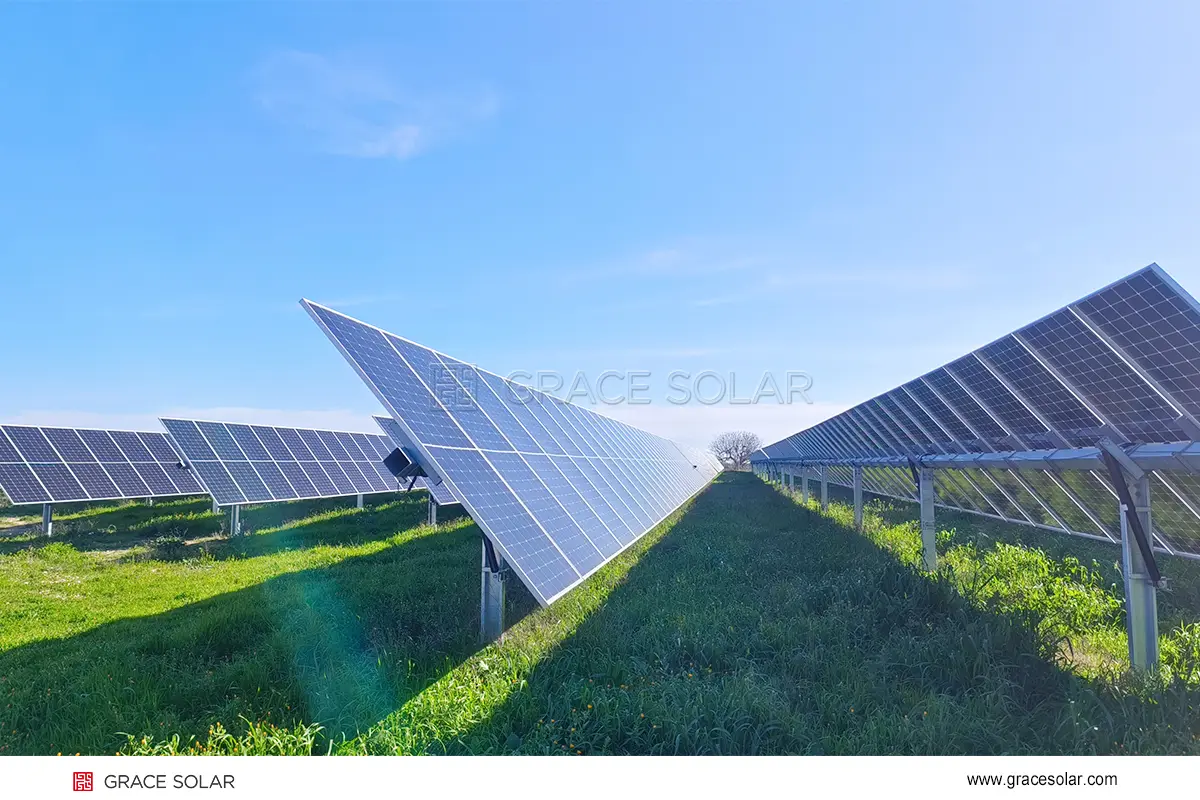
Figure 1: Grace Solar's GS-Light single-axis tracking system deployed in a 3.8MW utility-scale plant in Italy, maximizing energy yield through precise sun-following technology.
Table of Contents
- 1. Energy Yield: Trackers "Chase the Sun," Fixed Mounts Stay Steady
- 2. Cost Comparison: Upfront vs Lifetime Value
- 3. Application Scenarios & Global Case Studies
- 4. O&M: Which is Easier to Maintain?
- 5. How to Choose? Decision Guide
- 6. Why Partner with Grace Solar?
1. Energy Yield: Trackers "Chase the Sun," Fixed Mounts Stay Steady
Fixed Mounts: The Epitome of Simplicity & Reliability
The fixed-tilt design is a time-tested solution, prized for its straightforward engineering and ease of installation. With no moving parts, it sets a baseline for performance and durability.
- Typical Efficiency: Delivers approximately 75%-85% of the maximum possible annual yield when set at an optimal, location-specific tilt angle.
- Best For: Regions with consistently high and stable irradiance, particularly at low to mid-latitudes. It's also the default choice for projects where simplicity and proven track record are paramount.
- Grace Solar's Solution: Our GS-Smart ground mounting system and GS-Energy roof mounting system exemplify this category, offering robust, certified designs that are the "workhorse" for dependable solar generation worldwide.
Tracking Mounts: AI-Powered Precision for Maximum Harvest
Modern tracking systems have evolved far beyond simple sun-following mechanisms. GraceSolar’s Smart Tracking System leverages AI and IoT to intelligently optimize the sun's path, transforming energy capture.
- Yield Boost: Achieves 15-25% higher annual energy production compared to fixed-tilt systems, directly boosting revenue.
- Smart Features: Goes beyond basic tracking. Our GS-Light intelligent tracking system incorporates real-time weather adaptation (stowing in high winds), backtracking to avoid row-to-row shading, and energy-saving night positioning modes.
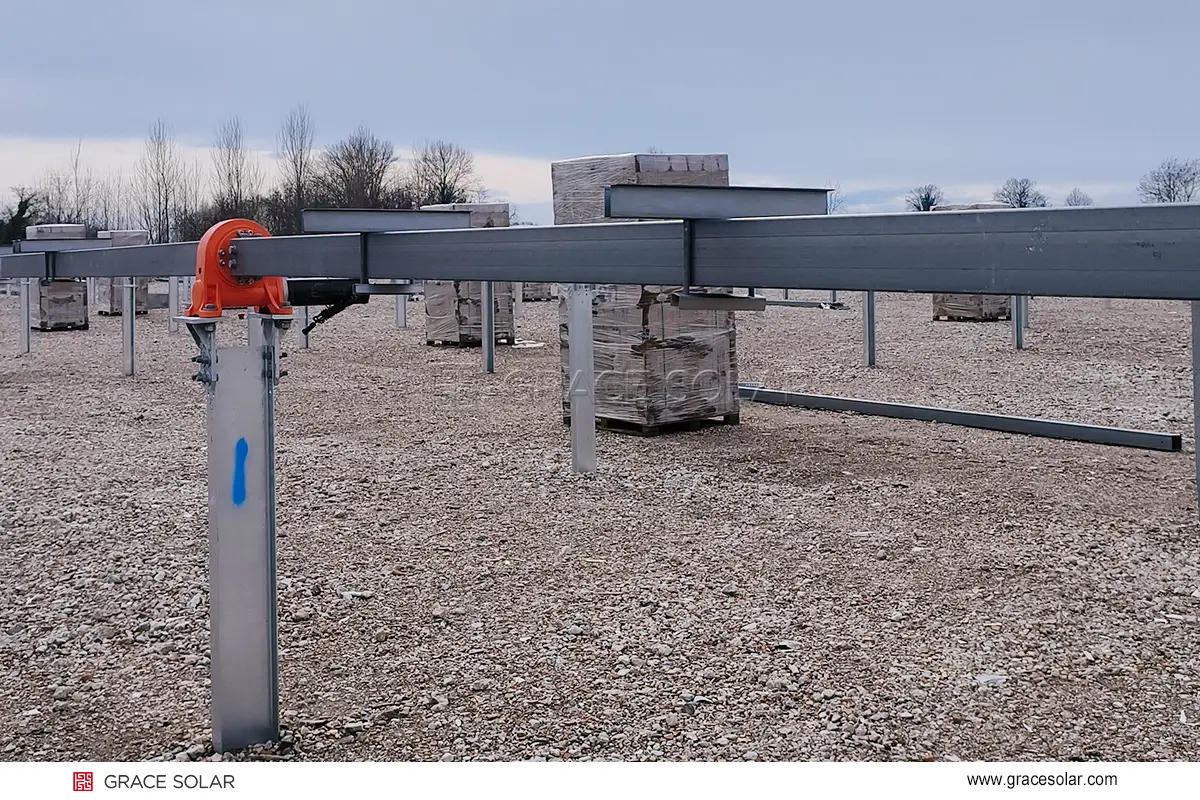
Figure 2: Aerial perspective of the Italian 3.8MW plant showcasing the precise alignment and uniform tracking of Grace Solar's GS-Light system across challenging terrain.
Verdict: Trackers are the clear winner for maximizing output, especially in markets with high electricity prices or where land is at a premium. Fixed mounts remain the champion for budget-sensitive, low-maintenance projects where extreme reliability is the primary driver.
2. Cost Comparison: Upfront CAPEX vs. Lifetime Value (LCOE)
The Economy of Fixed Mounts
- Lower CAPEX: Simpler structure and mass-production friendly design lead to significantly lower upfront material and installation costs, enabling a faster simple ROI.
- Minimal Lifetime O&M: The absence of motors, controllers, and drives translates to near-negligible maintenance costs and less operational complexity over the plant's 25+ year lifespan.
The Value Proposition of Tracking Mounts
- Higher Initial Investment: Typically costs 30-50% more than fixed-tilt systems due to advanced components and controls.
- Lower Levelized Cost of Energy (LCOE): This is the critical metric. The significant energy yield gain often results in a lower LCOE in high-irradiance areas, meaning the cost per kilowatt-hour generated is cheaper over the project's life.
- Faster Payback in Ideal Conditions: In utility-scale applications with high sun exposure, the increased revenue can lead to a payback period 1-3 years faster than fixed systems, justifying the initial premium.
Key Insight: The financial case for trackers strengthens with project scale, local energy prices, and available irradiance. They are a capital investment designed to maximize lifetime earnings.
3. Application Scenarios & Global Case Studies
Where Fixed Mounts Excel:
- Low-Latitude Zones: Regions like Southeast Asia, where the sun is high in the sky, benefit well from a fixed optimal angle.
- Harsh Environments: Coastal areas with salt corrosion or deserts with sand abrasion. Simpler structures with protective coatings, like Grace Solar's reinforced solutions, are easier to seal and maintain.
- Distributed Generation (DG) & C&I Roofs: Rooftop projects often favor fixed mounts due to space constraints, wind load considerations, and lower maintenance requirements.
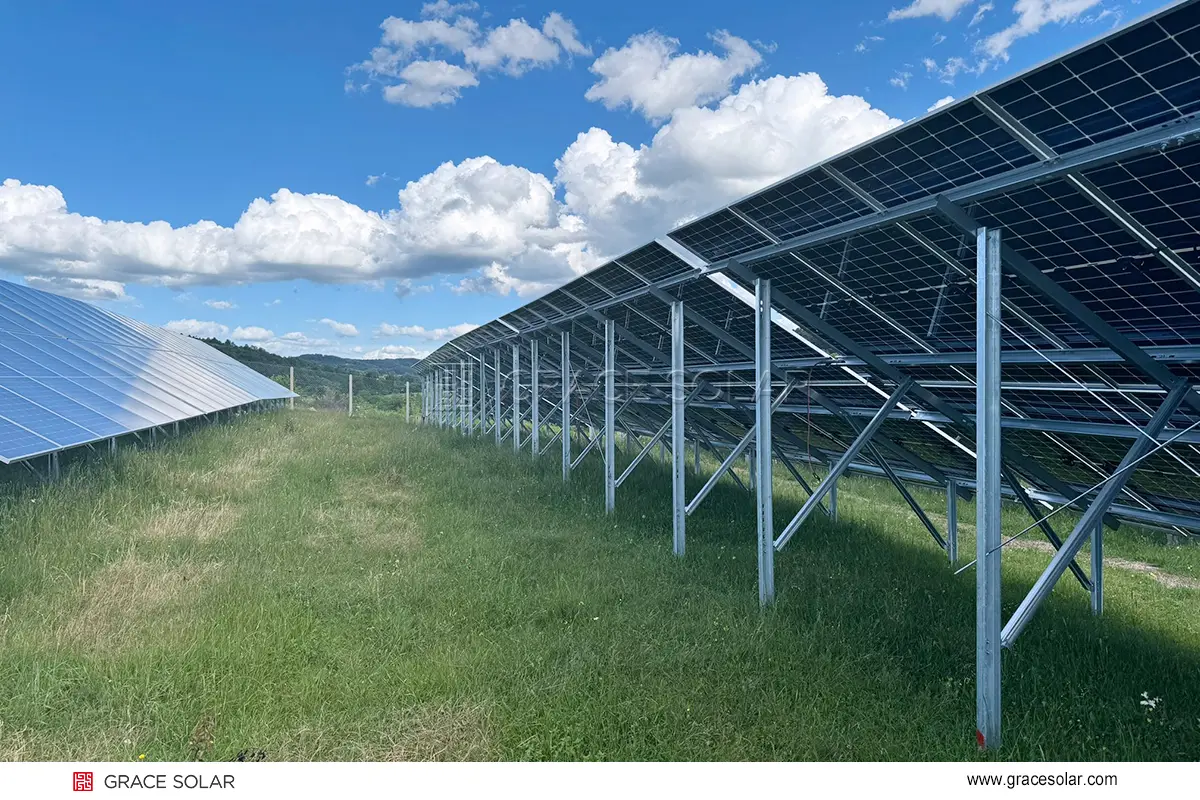
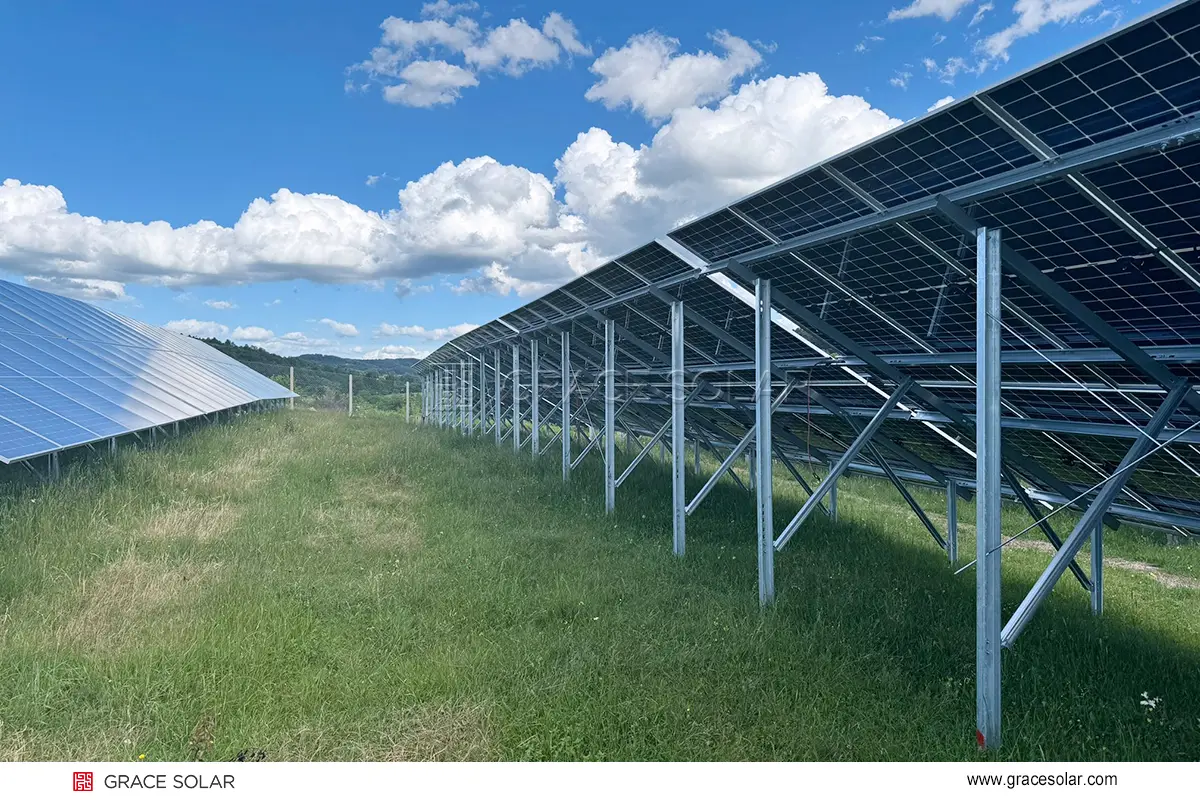
Figure 3: Grace Solar's robust 3MW carbon steel ground mount system in Bosnia, engineered for durability and stability in variable climate conditions including snow load.
Where Tracking Mounts Dominate:
- Utility-Scale Plants: Large ground-mounted farms in deserts or open fields where maximizing output per acre is crucial for project economics.
- High-Latitude Regions: Areas like Europe or North America, where the sun's path varies significantly seasonally. Trackers capture more low-angle sun in winter and shoulder seasons.
- Bifacial Module Projects: Trackers significantly enhance bifacial gain (by 10-20% from the rear side) by optimally exposing both sides of the panel to sunlight and reflective ground surfaces.
Grace Solar in Action: Global Case Studies
Our 48GW of global experience provides real-world validation:
- Japan: Our trackers are optimized for enhanced low-light and diffuse light performance, crucial in certain regional climates.
- Middle East & Australia: We integrate sand-resistant designs with automated cleaning compatibility to combat soiling losses in arid environments.
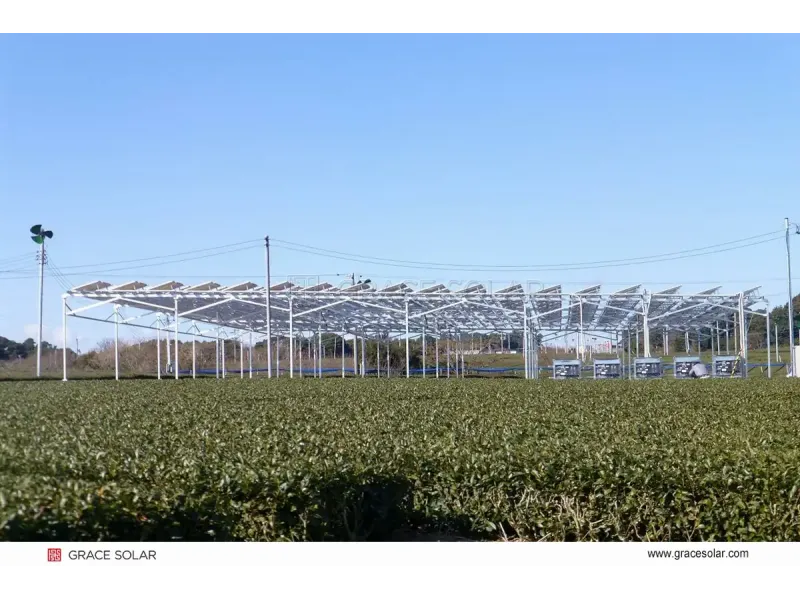
- Agrivoltaics & Floatovoltaics: We provide specialized elevated tracking structures for crop compatibility and floating system solutions, showcasing our versatility beyond traditional installations.
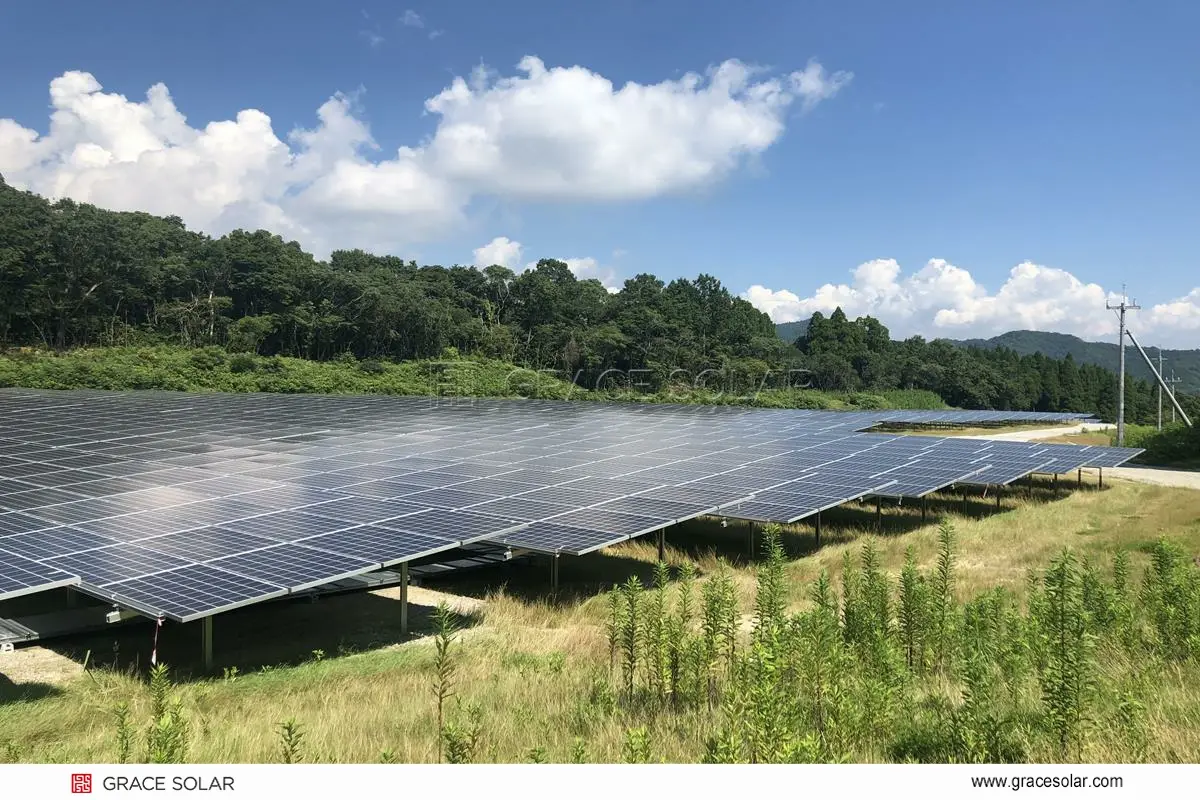
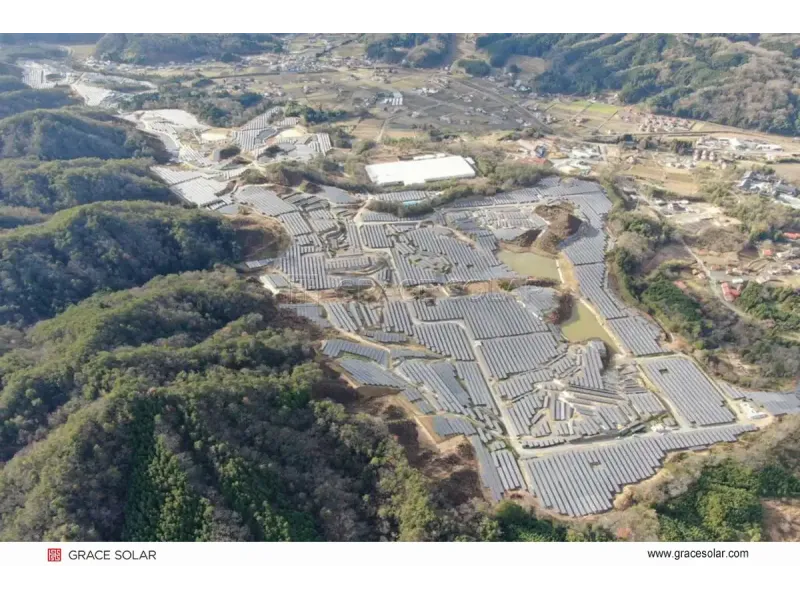
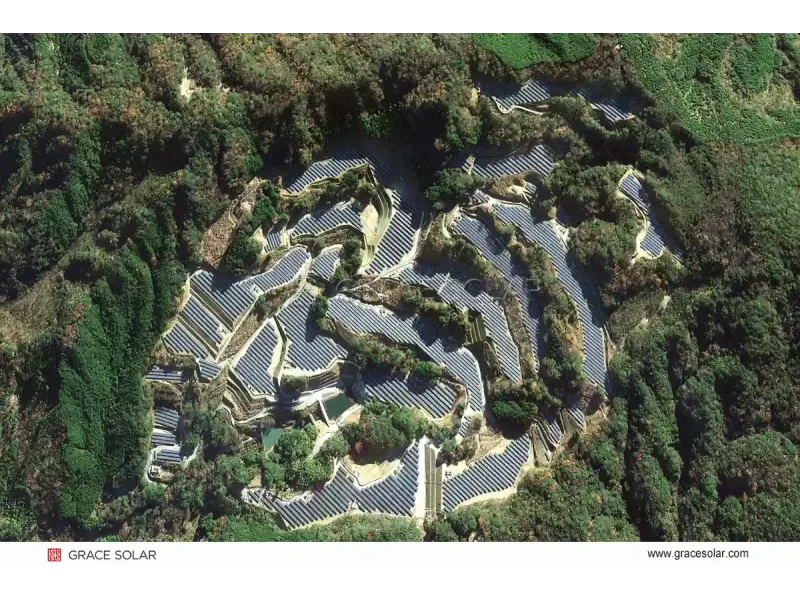
Figure 4: Aerial view of a massive 47MW fixed-tilt ground mount installation in Miyazaki, Japan, utilizing Grace Solar's GS-Smart mounting systems for optimal land use and reliability.
4. O&M: Which is Easier to Maintain?
Fixed Mounts: The Low-Touch Option
Maintenance is primarily limited to annual or bi-annual visual inspections and bolt torque checks. Their passive nature makes them incredibly reliable.
Tracking Mounts: Overcoming Past Challenges with Smart Tech
Early trackers faced issues like motor failures and calibration drift. GraceSolar's modern solutions are engineered to solve these problems:
- AI Predictive Maintenance: Our systems monitor component health, predicting failures before they occur, scheduling maintenance, and minimizing downtime.
- Storm-Proof Engineering: Designs are rigorously wind tunnel tested and feature intelligent stowing strategies to withstand extreme weather events.
- Remote Monitoring & Diagnostics: Full IoT integration allows for remote calibration, performance analysis, and troubleshooting, drastically reducing site visits and O&M costs.
5. How to Choose? Your Project Decision Guide
| Your Top Priority | Recommended Solution | Grace Solar Product Series |
|---|---|---|
| Tight Budget, Simplicity | Fixed Mounts | GS-Smart / GS-Energy Series |
| Maximum Energy Yield & ROI | Single-Axis Trackers | GS-Light Intelligent Tracking System |
| High-Wind, Coastal, or Corrosive Zones | Reinforced, Corrosion-Resistant Fixed Mounts | Certified GS-Smart Systems |
| AgriPV, Floatovoltaics, or Complex Terrain | Customized Elevated or Specialized Systems | Contact for Custom Solution |
6. Why Partner with Grace Solar?
Choosing a mounting system is choosing a long-term partner. Here’s what sets Grace Solar apart:
- Proven Scale & Expertise: 17+ years in solar, ranking among the global top 5, with a cumulative 48GW deployed across 100+ countries.
- Technology Leadership: We integrate AI, IoT, and smart manufacturing into our GS-Light tracker and other systems, ensuring you get a future-proof product.
- Unmatched Reliability & Certification: Our products are wind-tunnel tested and hold major global certifications (TÜV, JIS, CE, MCS, UL), providing bankability and peace of mind.
- Complete Solution Provider: One of the few brands capable of delivering full EPC solutions for both Distributed (DG) and Utility-Scale (UG) markets.
- Enterprise Commitment: Guided by our core value "Do it right the first time," we are dedicated to mounting every solar plant firm as rock and bringing more profits from the sun to our clients.
Ready to Optimize Your Solar Project?
There is no universal "best" solution—only the right one for your specific site conditions, financial model, and energy goals. Let our team of sophisticated engineers help you analyze your project and recommend the optimal mounting system.
/Aluminum%20alloy%20solar%20ground%20mount%20system%20for%20residential%20solar%20panels-400x300w.webp "A-Type Ground Mounting System - Landscape Placement (Aluminum Alloy)")
/Modular%20ground-mounted%20solar%20structure%20with%20corrosion-resistant%20coating-400x300w.webp "A-Type Ground Mounting System - Landscape Placement (Aluminum Alloy)")
/W-Type%20aluminum%20solar%20mounting%20system%20structural%20detail-400x300w.webp "W-Type Ground Mounting System - Landscape Placement ( Aluminum alloy )")
/Ground%20screw%20foundation%20installation%20for%20Grace%20Solar%20racking-400x300w.webp "W-Type Ground Mounting System - Landscape Placement ( Aluminum alloy )")
/Adjustable%20solar%20ground%20mount%20system%20on%20snowy%20mountain%20with%2055%20Angle%20tilt_-400x300w.webp "Adjustable Ground Mounting System - Portrait Placement ( Carbon steel )")
/Engineer%20assembling%20Grace%20Solar's%20portrait%20ground%20mount%20in%20typhoon%20area_-400x300w.webp "Adjustable Ground Mounting System - Portrait Placement ( Carbon steel )")
/ZAM-coated%20steel%20components%20for%20corrosion-resistant%20solar%20racking_-400x300w.webp "Double Column Piling Ground Mounting System - Landscape Placement ( Aluminum alloy )")
/Double-column%20aluminum%20solar%20ground%20mounting%20system%20for%20large-scale_-400x300w.webp "Double Column Piling Ground Mounting System - Landscape Placement ( Aluminum alloy )")
/Al-Zn-Mg%20coated%20piling%20structure%20for%20extreme%20weather%20resistance_-400x300w.webp "Double Column Piling Ground Mounting System - Portrait Placement ( Carbon steel )")
/Double-column%20carbon%20steel%20solar%20ground%20mount%20system%20with%20portrait%20panel%20arrang_-400x300w.webp "Double Column Piling Ground Mounting System - Portrait Placement ( Carbon steel )")
/Aluminum%20alloy%20solar%20ground%20mount%20system%20installation%20on%20residential%20property_-400x300w.webp "Non-leg Ground Mounting System - Portrait Placement ( Aluminum alloy )")
/Close-up%20of%20anodized%20aluminum%20clamp%20connection%20in%20ground%20mounting%20system_-400x300w.webp "Non-leg Ground Mounting System - Portrait Placement ( Aluminum alloy )")
/Aluminum%20Alloy%20Solar%20Panel%20Ground%20Mount%20Frame_-400x300w.webp "N-Type Ground Mounting System - Portrait Placement ( Aluminum alloy )")
/Adjustable%20Tilt%20Ground%20Mount%20Solar%20Racking%20System_-400x300w.webp "N-Type Ground Mounting System - Portrait Placement ( Aluminum alloy )")
/Grace%20Solar%20ground%20mount%20installation%20on%20concrete%20foundation%20with%20rail%20clamps_-400x300w.webp "VV-Type Ground Mounting System - Portrait Placement ( Aluminum alloy )")
/Aluminum%20alloy%20solar%20ground%20mounting%20system%20portrait%20placement%20for%20495W%20panels_-400x300w.webp "VV-Type Ground Mounting System - Portrait Placement ( Aluminum alloy )")