Table of Contents
Defining “Best”: It’s About the Right Fit
The search for a single “best” energy storage system is a mirage. In reality, the optimal solution is always the one that best matches your specific requirements. Just as you wouldn't use the same tool to build a house and fix a watch, different storage technologies excel in different applications. The global market reflects this diversity: pumped-storage hydropower provides over 90% of the world's grid-scale storage capacity due to its massive scale, while lithium-ion batteries are the fastest-growing technology, dominating applications from electric vehicles to home backup power.
Choosing correctly requires analyzing four key pillars: Scale & Duration (are you powering a home for hours or a city for days?), Performance Metrics (how fast do you need the power, and for how many cycles?), Total Cost of Ownership (including installation, maintenance, and lifespan), and Site-Specific Constraints (available space, geography, and grid connection). The “best” system is found at the intersection of these factors.
For instance, a rural micro-grid requiring power over multiple cloudy days would prioritize long-duration solutions like flow batteries or hydrogen, even if they have a higher upfront cost. Conversely, an urban data center needing millisecond-level backup to prevent server crashes would invest in ultra-fast flywheels or supercapacitors. The International Energy Agency (IEA) emphasizes that a diversified portfolio of storage technologies is crucial for grid stability as renewable penetration increases beyond 30-40%.
Technology Breakdown: Top Contenders Explained
Here is a comparative analysis of the leading energy storage technologies, based on global deployment data and industry reports from sources like the IEA and leading energy publications.
| Technology | Best For | Key Advantage | Consideration |
|---|---|---|---|
| Lithium-Ion Batteries | Home storage, EVs, short-duration grid support (0-4 hrs) | High energy density, fast response, modular, falling costs | Cycle life, thermal management, raw material supply |
| Pumped Hydro Storage | Large-scale, long-duration grid storage (6-24+ hrs) | Proven, very large capacity (GWh), low operational cost | Geographic constraints, long permitting/construction |
| Flow Batteries (e.g., Vanadium) | Commercial/industrial, long-duration grid storage (4-12 hrs) | Decoupled power/energy, long cycle life, inherent safety | Lower energy density, higher upfront capex |
| Thermal Energy Storage | Industrial heat, concentrated solar power (CSP), district heating | Very low cost per kWh thermal, utilizes abundant materials | Energy form (heat), requires specific use case |
| Compressed Air (CAES) & Gravity | Grid-scale, long-duration & bulk energy management | Long lifespan, large-scale potential | Site-specific (caverns/height), efficiency challenges |
The Rising Star: Lithium-Ion Dominance
Lithium-ion technology's versatility has made it the workhorse of the energy transition. Its growth is fueled by the electric vehicle revolution, which has driven down costs by over 80% in the past decade. For residential and commercial applications, Lithium Iron Phosphate (LFP) chemistry is increasingly favored for its longer lifespan, superior thermal stability, and avoidance of critical materials like cobalt. As noted in the search results, companies like Tesla, Enphase, and Generac are leading with LFP-based home storage solutions like the Powerwall and IQ Battery. The technology's modular nature allows it to scale from a 10 kWh home unit to a 100+ MWh grid-scale battery energy storage system (BESS), providing services from peak shaving to frequency regulation.
The Established Giant: Pumped Hydro
Don't overlook the incumbent. Pumped-storage hydropower remains the backbone of grid flexibility globally. As the IEA confirms, it accounts for the vast majority of installed storage capacity. Its ability to store and release gigawatt-hours of energy for days on end is unmatched by any electrochemical solution today. New innovations, like variable-speed pumps and closed-loop systems that reduce environmental impact, are ensuring this century-old technology remains vital. Projects in mountainous regions continue to be developed, while novel concepts like “subsea pumped hydro” are being explored for coastal areas.
The Dark Horse: Flow Batteries for Long Duration
For applications requiring more than 4 hours of continuous discharge, flow batteries present a compelling case. Unlike conventional batteries, they store energy in liquid electrolytes held in external tanks. This architecture allows for independent scaling of power (by enlarging the cell stack) and energy (by increasing tank size). Vanadium redox flow batteries (VRFBs) are the most commercially advanced, offering exceptional cycle life (over 15,000 cycles) and no risk of thermal runaway. They are finding their niche in stabilizing microgrids with high solar penetration, providing backup for critical infrastructure, and enabling renewable integration at industrial facilities.
How to Choose: A Practical Decision Guide
Follow this decision framework to narrow down your options:
- Define Your Primary Goal: Is it bill savings (time-of-use shifting), backup power (resilience), grid support (frequency regulation), or renewable integration (smoothing solar/wind output)? Your goal dictates the required discharge duration and response time.
- Quantify Your Needs: Calculate the required power (kW) and energy capacity (kWh). A home backup may need 10-30 kWh, while a solar farm may require 100+ MWh. Also, consider the required cycles per year.
- Evaluate Financials: Analyze total cost, available incentives (like the 30% ITC in the US), and potential revenue streams (grid services). A simple payback period analysis is essential. Remember, a cheaper upfront cost may lead to higher replacement costs sooner.
- Assess Physical & Regulatory Space: Review site layout, zoning, interconnection rules, and maintenance capabilities. Can the site support heavy concrete foundations, or is a lightweight steel structure preferable?
For most homeowners with solar, a modern LFP battery system is the default best choice. For utility-scale projects, a hybrid approach—using lithium-ion for fast response and pumped hydro or flow batteries for long duration—is becoming the industry blueprint. The key is to future-proof your investment by selecting technology with a clear path for scalability and compatibility with evolving grid software.
The Critical Role of the Physical Foundation
The discussion often focuses on the batteries or turbines, but the structural foundation is what ensures any storage system operates safely, reliably, and for its full lifespan. This is where engineering expertise becomes paramount. A poorly designed mounting or enclosure system can lead to catastrophic failure under high wind loads, accelerate corrosion, or complicate maintenance, negating the benefits of the storage technology itself. The structural integrity directly impacts system uptime, safety, and total cost of ownership.
At Grace Solar, a global leader in smart solar mounting with a track record of over 48GW installed, we apply this same precision engineering to the burgeoning energy storage sector. We understand that the “best” storage system includes a best-in-class physical support structure. Our mission to “mount every solar plant firm as rock” extends directly to energy storage projects, ensuring they are built on a foundation of unwavering reliability.
Engineered Solutions for Diverse Storage Needs
Our expertise extends into tailored support structures for various storage applications, demonstrating that optimal energy solutions often involve integrated physical design:
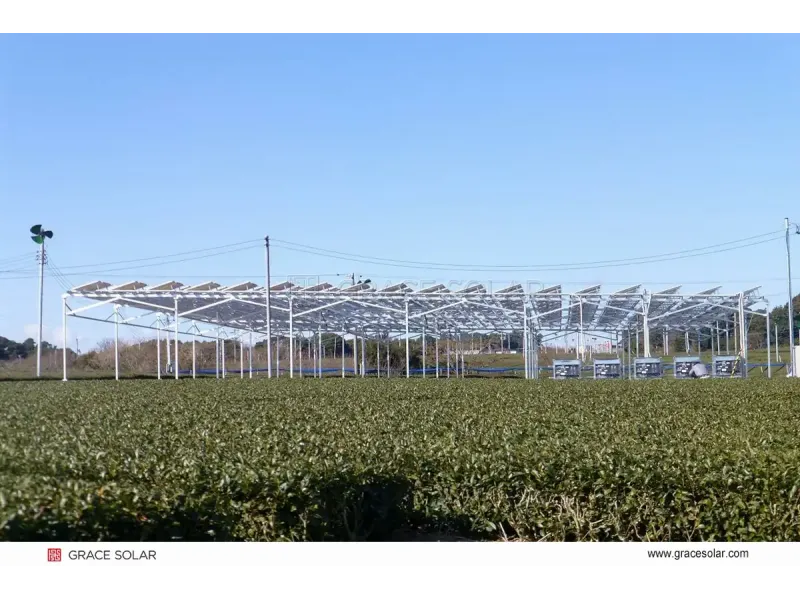
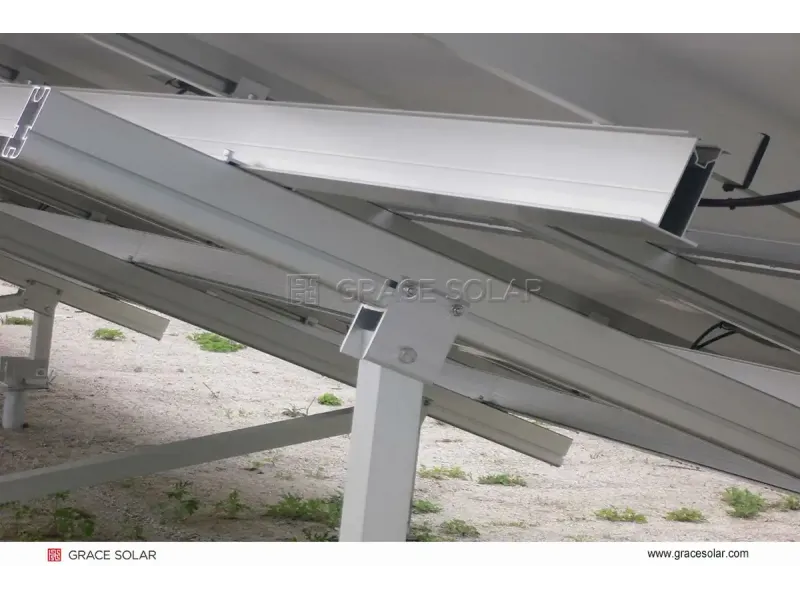
- Ground-Mounted Battery Energy Storage System (BESS) Support: Our high-strength carbon steel structures, like the G58 system, are engineered for stability under heavy loads and harsh environmental conditions. They offer faster, more material-efficient installation compared to traditional concrete bases, ensuring a secure foundation for containerized or modular battery units. This approach aligns with the need for rapid deployment and reduced levelized cost of storage (LCOS).
- Integrated Noise Barrier Systems: For storage projects near residential areas or requiring specific permits, our C5 Acoustic Barrier System serves a dual purpose: providing robust structural support for equipment while effectively mitigating operational noise—a key consideration for community acceptance and regulatory compliance. This integrated solution saves space and cost compared to building separate noise walls.
- Container-Top Solar Canopies: Our Container-Top Mounting System showcases innovative dual-use of space and assets. By installing solar panels atop storage containers, we help reduce solar thermal radiation on the container surface by up to 70%, significantly lowering internal cooling energy demands and extending the life of the sensitive battery equipment inside. This creates a synergistic system that generates additional clean power while improving the efficiency and longevity of the storage asset itself.
These solutions are born from our core value: "Do it right the first time." We ensure every storage plant is mounted "firm as rock," protecting your critical energy investment. From withstanding +46 m/s winds to providing 10-year quality assurance, our designs are tested and certified to global standards. Contact our engineering team to discuss custom support solutions for your specific storage project, whether it's a standalone BESS, a solar-plus-storage farm, or a complex microgrid.
The Future of Energy Storage: Trends to Watch
The energy storage landscape is not static. Several key trends are shaping its evolution, moving the industry beyond simple battery packs:
- Solid-State Batteries: Promising higher energy density, dramatically faster charging, and improved safety by replacing flammable liquid electrolytes with solid materials, they are the next frontier for EVs and high-performance storage. Major automakers and battery giants are targeting commercial deployment post-2027.
- AI & Software-Defined Storage: Intelligence is becoming as important as the hardware. Advanced AI algorithms optimize charge/discharge cycles in real-time, maximizing revenue from energy arbitrage and grid services while conducting predictive maintenance to prevent failures.
- Hybrid & Long-Duration Storage (LDES): The future grid will layer technologies. Expect more “battery +” systems (e.g., lithium-ion + flywheel for instant inertia) and significant growth in LDES technologies (8-100+ hours) like green hydrogen, advanced compressed air, and novel thermal storage to manage weekly or seasonal variations in renewable output.
- Circular Economy & Second-Life Batteries: As the first wave of EV batteries reaches end-of-life, repurposing them for less demanding stationary storage applications is gaining traction. This extends the battery's useful life, reduces waste, and provides a lower-cost storage option for applications like commercial peak shaving.
Conclusion: Building a Resilient Energy Future
The best energy storage system is not a singular technology but the optimal combination chosen through careful analysis of your goals, constraints, and economics. From the electrochemical excellence of lithium-ion to the massive capacity of pumped hydro, each technology has a critical role to play in the global energy transition. Success depends on pairing these advanced technologies with equally robust, engineered physical infrastructure—the silent partner that ensures reliability, safety, and longevity over decades of operation.
The journey towards a decarbonized grid is underpinned by storage. By making informed, holistic choices that consider both the digital and physical layers of the system, developers, utilities, and homeowners can build energy solutions that are not only efficient but also resilient and sustainable for the long term.
Are you planning an energy storage project and need a reliable, engineered foundation? Get in touch with Grace Solar's experts today. With over a decade of experience and a presence in more than 100 countries, we provide the trustworthy structural solutions that make the best energy storage systems even better.