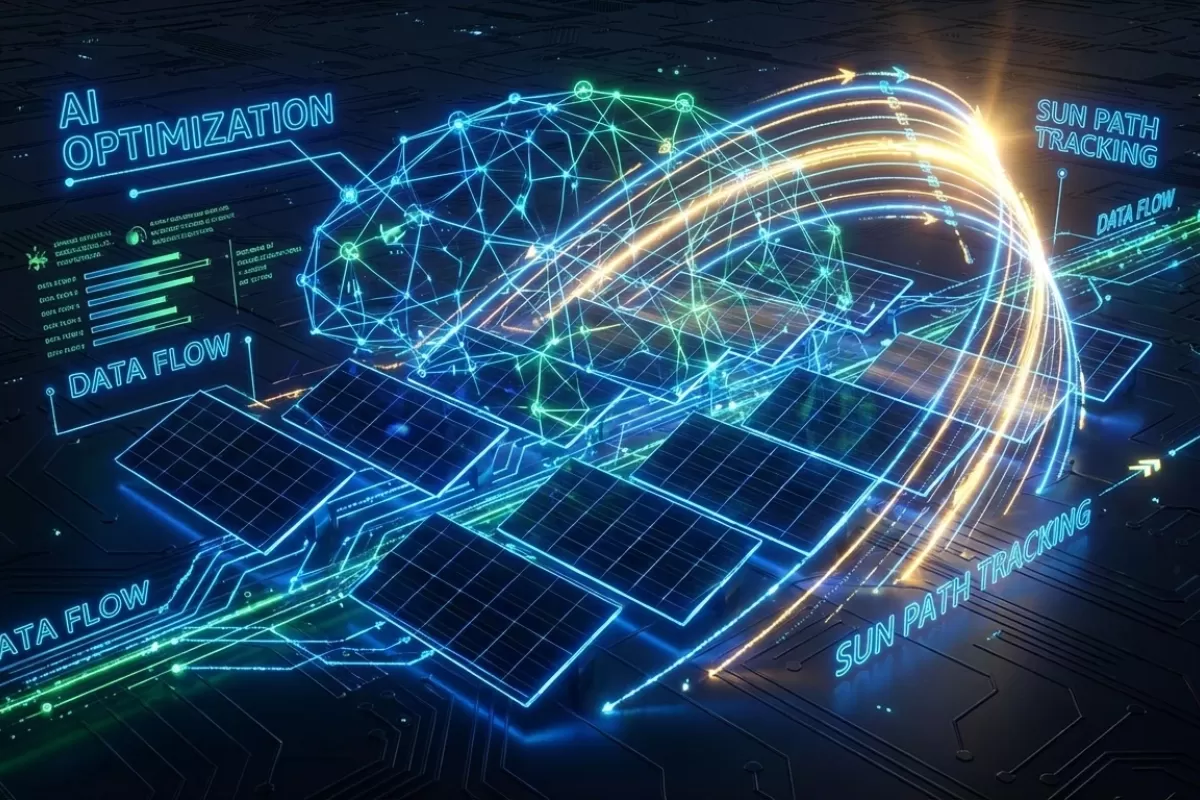
Global Solar Tracking Systems Technology Deep Dive: 2025-2034 Trends, Algorithm Evolution, and LCOE Optimization
Exploring next-generation hardware, AI-driven control, and the future of utility-scale PV efficiency.
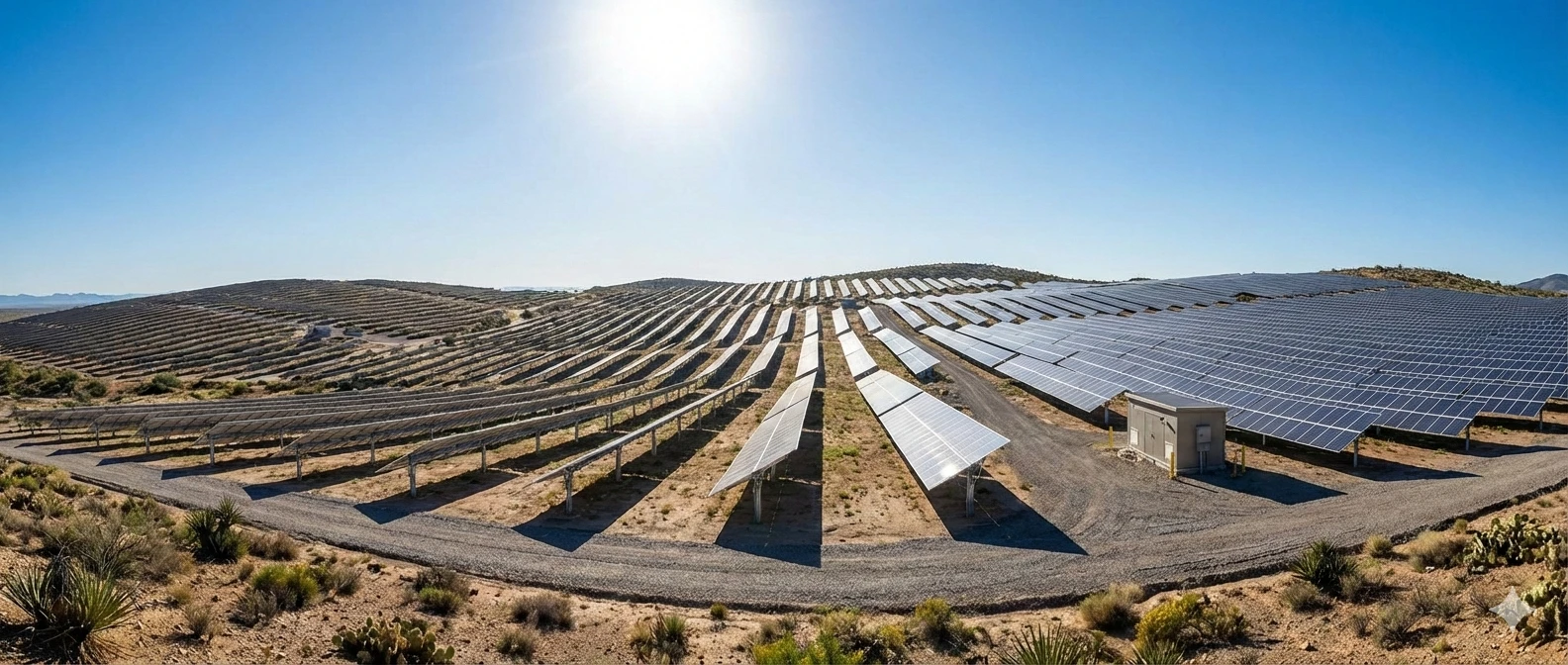
Table of Contents
- • 1. The Evolution of Solar Tracking: Beyond Fixed Tilt
- • 2. Hardware Engineering Breakthroughs
- • 3. Intelligent Algorithms: From Astronomy to AI
- • 4. Extreme Climate Resilience & Active Defense
- • 5. Terrain-Adaptive & No-Grading Solutions
- • 6. Digital O&M & AI-Powered Predictive Maintenance
- • 7. Bifacial Synergy & Environmental Optimization
- • 8. LCOE & ROI: The Economic Case for Trackers
- • 9. Industry Leaders and Integrated Solutions
- • 10. Future Outlook & Getting Your Customized Solution
1. The Evolution of Solar Tracking: Beyond Fixed Tilt
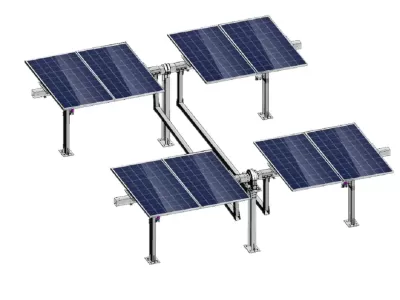
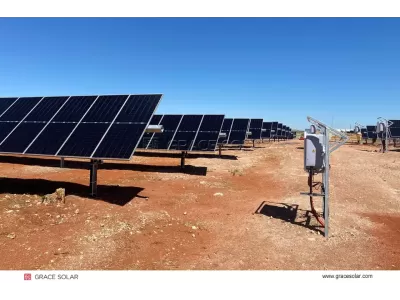
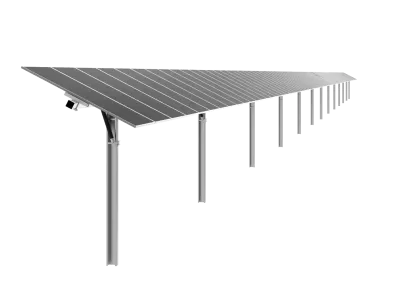
As global photovoltaic capacity surpasses 2.2 TWdc, the industry has shifted from pure capacity expansion to deep efficiency optimization. Solar tracking systems have become the cornerstone of utility-scale projects, delivering 20–35% higher energy yield compared to fixed-tilt structures. Modern trackers are no longer just mechanical frames; they are cyber-physical systems integrating AI, IoT, and advanced mechanics. The synergy between horizontal single-axis trackers (HSAT)—which dominate the market—and dual-axis designs for specialized applications creates a technology ladder that investors can climb based on land cost, latitude, and climate. Companies like Grace Solar, a top-5 global tracker supplier with 48GW installed across 100+ countries, exemplify this transition with solutions protected by over 100 patents and certified by UL, TUV, CE, and JIS.
2. Hardware Engineering Breakthroughs: Multipoint Drive & Structural Rigidity
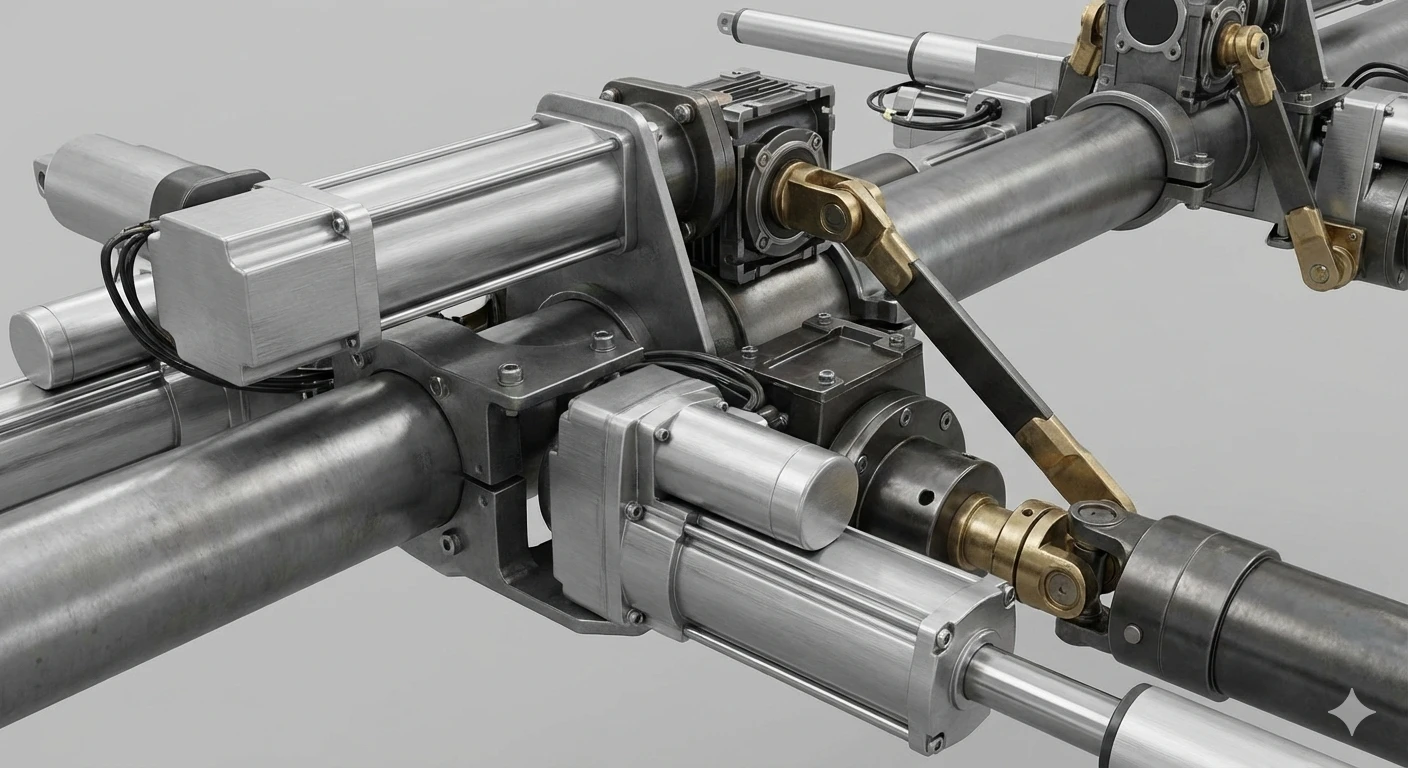
With modules reaching 600W+ and sizes of 210mm, tracker hardware faces unprecedented mechanical stress. Multipoint drive systems have become essential to maintain accuracy and prevent torsional galloping. By distributing stress across multiple actuators, these systems increase rigidity by over 20%, ensuring stable operation even under 60m/s winds—a threshold confirmed by rigorous wind tunnel tests.
2.1 Bearing & Gearbox Innovations
Mechanical longevity is critical for 25-year project lifespans. Advanced spherical bearings accommodate up to 30% of angular misalignment, compensating for foundation settlement and reducing maintenance. Combined with high-precision slew drives (non-backdriving), modern trackers achieve tracking errors below 0.5°, maximizing energy capture.
2.2 Self-Powered & Wireless Communication
To slash balance-of-system costs, many trackers now feature self-powered controllers drawing DC from PV strings, backed by Li-ion UPS. Communication leverages long-range LoRa and Zigbee, eliminating trenching for RS485 cables. This “cable-less” architecture simplifies installation and enhances scalability for large solar farms across the Americas, Middle East, and Asia.
3. Intelligent Algorithms: From Astronomy to AI
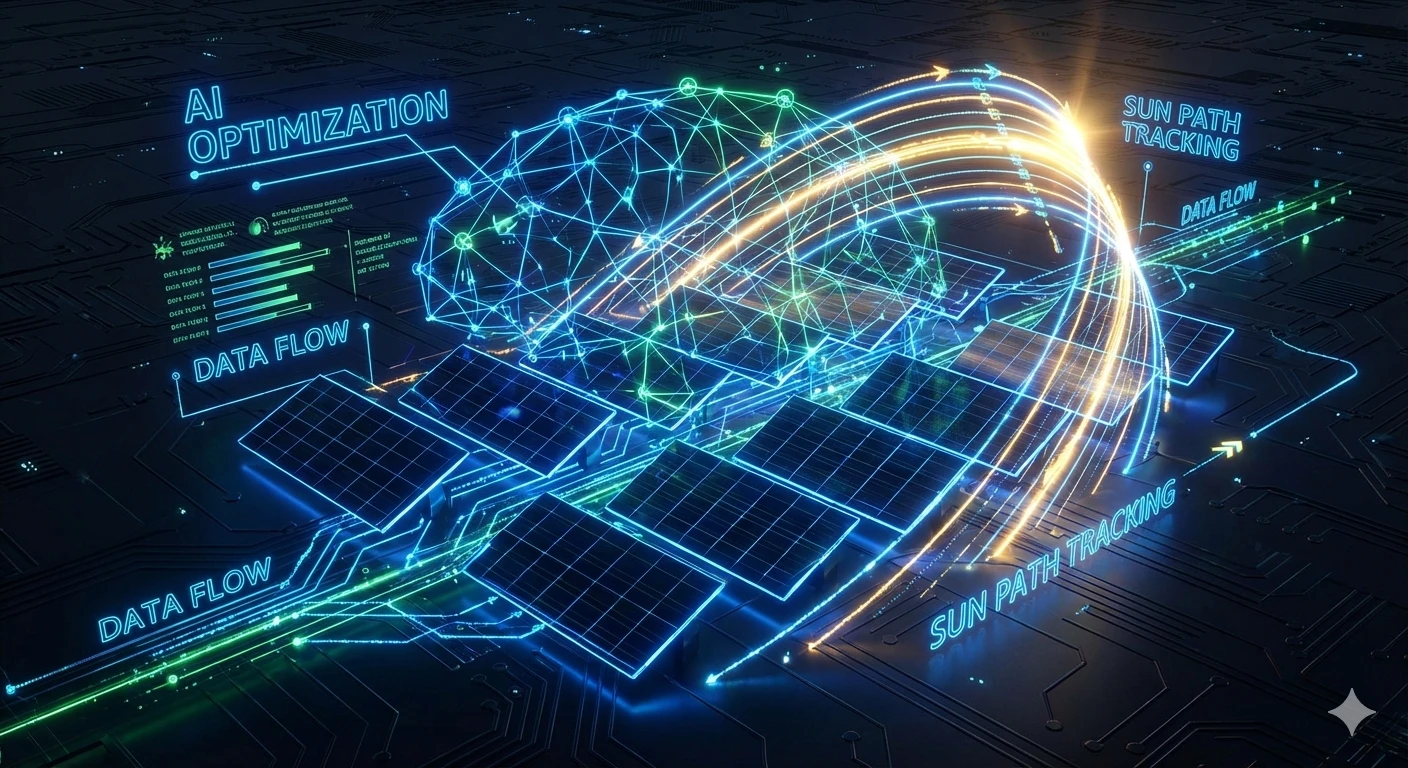
Astronomical algorithms alone are no longer sufficient. Today’s trackers must adapt to terrain, cloud cover, and albedo. Two core intelligent algorithms are now common: terrain-aware backtracking and diffuse-radiation optimization.
3.1 Terrain-Adaptive Backtracking
Conventional backtracking assumes flat land, leading to shading losses on slopes. AI-driven algorithms use 3D site surveys to model actual shading between rows, dynamically adjusting angles. Field data shows this smart backtracking boosts yield by up to 7% during morning and evening hours.
3.2 Diffuse & Bifacial Optimization
Under overcast skies, tracking to the sun’s position actually reduces output. Advanced algorithms detect diffuse ratio via on-site sensors and flatten the array to capture more sky radiation. Similarly, for bifacial modules, the system optimizes for total front + rear irradiance, factoring in albedo (up to +30% gain on snow).
4. Extreme Climate Resilience: Active Defense Against Wind, Hail & Snow
Climate volatility is the #1 threat to solar assets. Modern trackers incorporate an extreme weather protection strategy.
4.1 Torsional Galloping Suppression
Rather than stowing flat (which can induce resonance), advanced systems employ a symmetric damping stance at 5-30°, tuned to wind direction. This dissipates energy and prevents structural failure—validated in wind tunnel tests.
4.2 Hail & Snow Defense
Integrated with weather APIs, trackers can autonomously rotate to 75° stow angle before hailstorms, reducing impact energy by 90%. For snow, ultrasonic sensors trigger a steep tilt (up to 60°) to shed accumulation, protecting modules and reducing pile loads.
5. Terrain-Adaptive & No-Grading Solutions
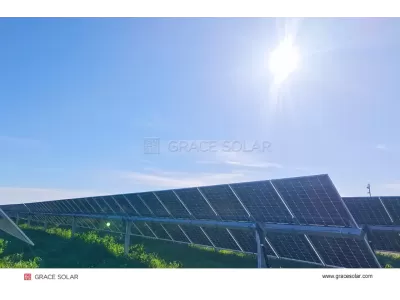
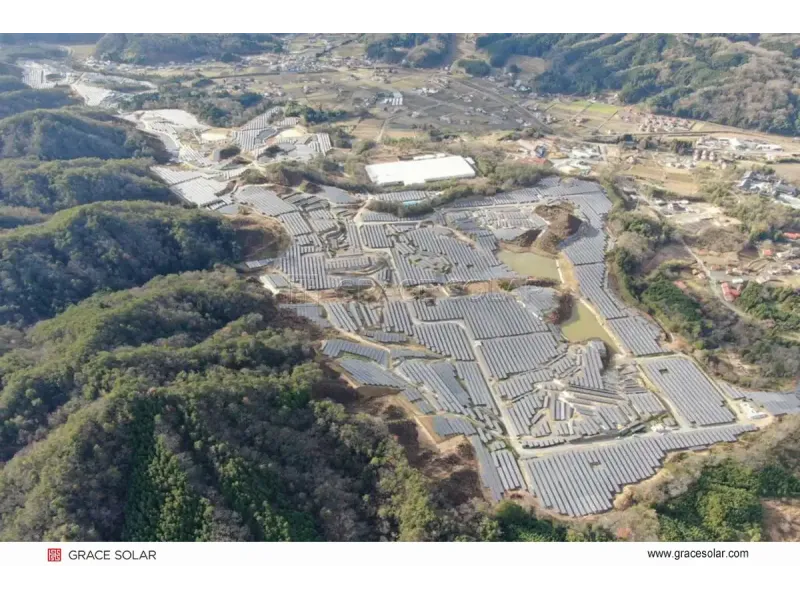
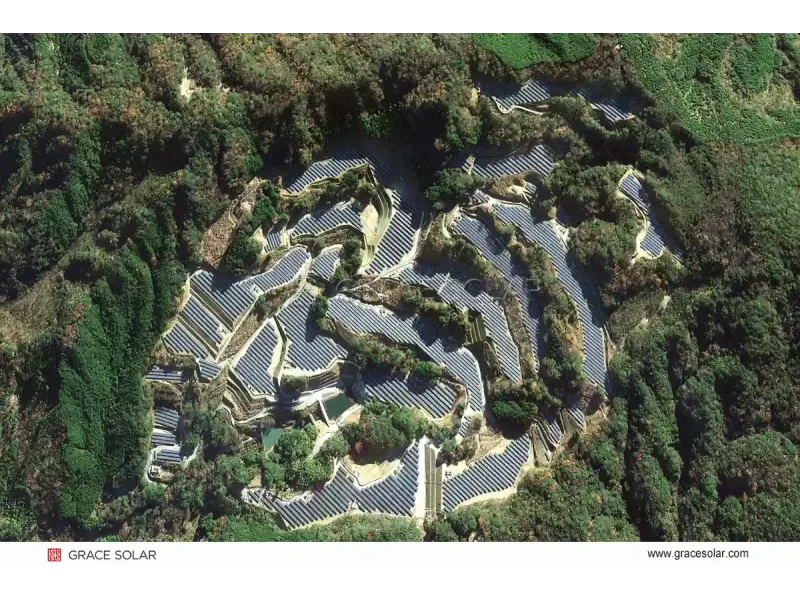
Massive land grading destroys ecosystems and inflates costs. Many trackers are now designed to follow natural contours, accommodating slopes up to 20% without extra foundations. This “no-grading” approach saves up to 5,000 tons of steel per 100MW and preserves topsoil—an environmental and economic win.
6. Digital O&M & AI-Powered Predictive Maintenance
IoT sensors and cloud-based monitoring are becoming standard. Digital twin platforms collect real-time data on angle, vibration, current, and temperature. Using LSTM neural networks, they predict failures—such as gearbox wear—before they occur. This AI-driven predictive maintenance reduces O&M costs by 30-40% and ensures 99.8% structural availability.
7. Bifacial Synergy & Environmental Optimization
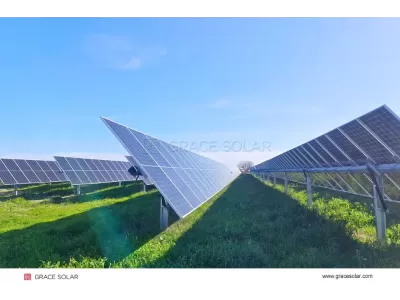
The combination of bifacial modules and trackers is the new industry standard. Optimized mounting components feature round torque tubes and no-backrail designs to minimize rear-side shading. By adjusting installation height (1.3-1.8m) and ground coverage ratio, systems harness maximum albedo—from 5% on grass to 30% on snow—delivering up to 10% additional bifacial gain.
8. LCOE & ROI: The Economic Case for Trackers
While tracking systems add 10-15% to upfront CAPEX, the 25.6% average yield gain translates to a 16% lower LCOE over the project lifetime. Bankable tracker designs—backed by RWDI wind reports and Fortune 500 partnerships—accelerate payback by 0.4 years versus fixed-tilt. In high-irradiation regions, trackers can achieve LCOE below $27/MWh.
9. Industry Leaders and Integrated Solutions
The tracker market is highly concentrated, with top suppliers driving innovation. Grace Solar, for instance, offers a full spectrum of solar mounting solutions tailored to any project scale and terrain:
- GS-Light Intelligent Tracking System: Multipoint drive, AI algorithms, 600W+ compatibility, 20% wind resistance boost, and 8% extra generation.
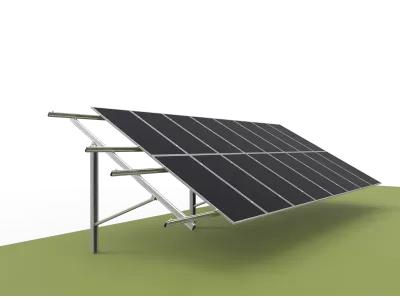
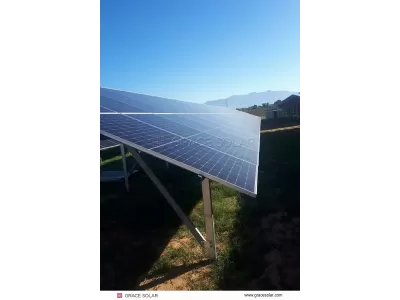
- GS-Smart Ground Mounting: High-strength aluminum/ZAM steel, 0-60° tilt, 60m/s wind rating, fast-assembly for residential to utility scale.
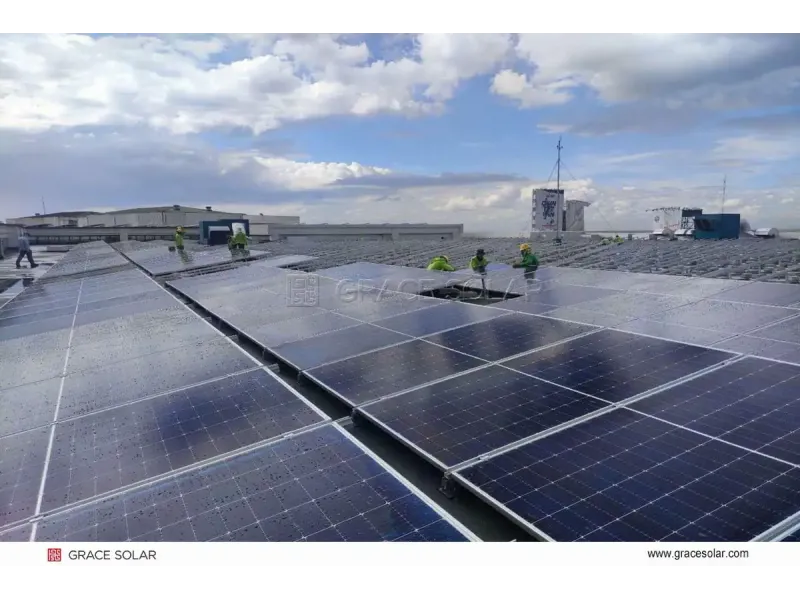
- GS-Energy Roof Mounting: No-drill clamps, rail/rail-less, 10-60° adjustable, certified for tile/metal/flat roofs.
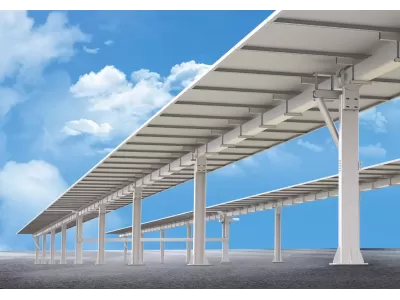
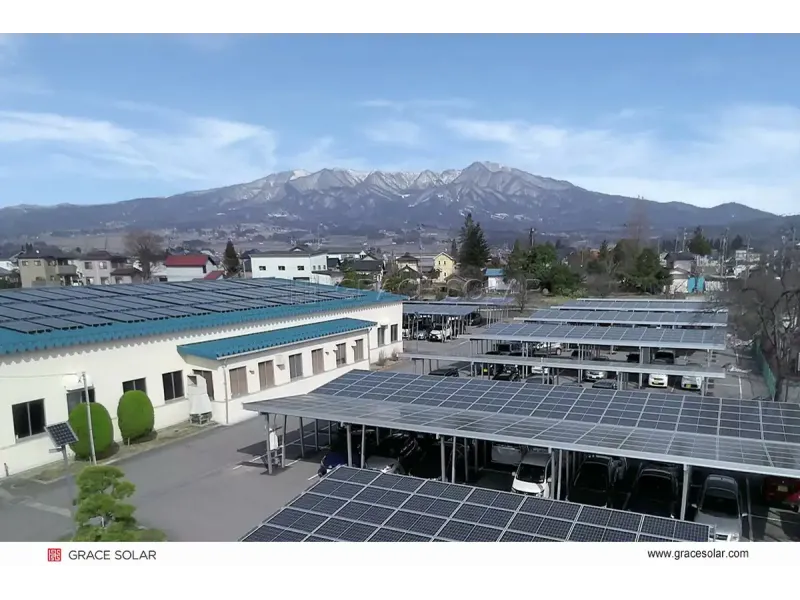
- Solar Carport Systems: Waterproof design, modular assembly, integrates with EV charging, 60m/s wind resistance.
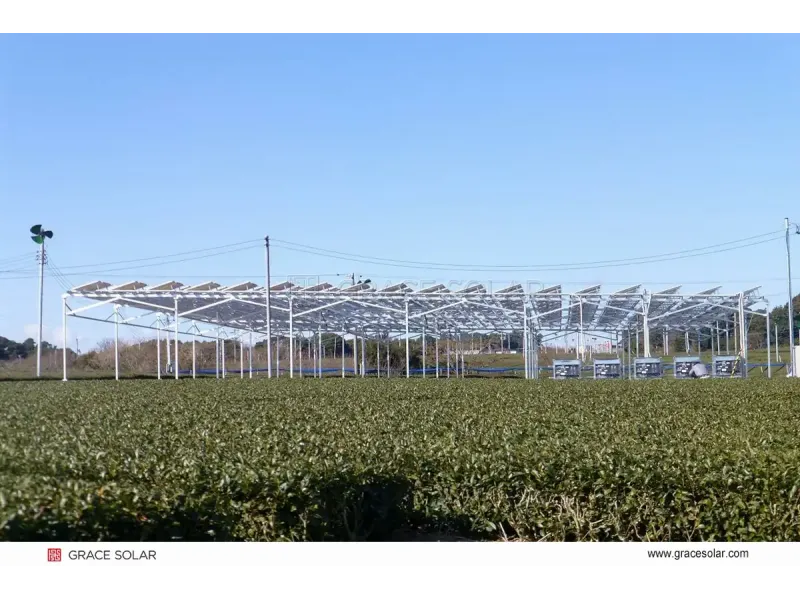
- Farm Mounting Systems: AI-integrated, 30° slope adaptability, reduces carbon footprint by 48 tons/project.
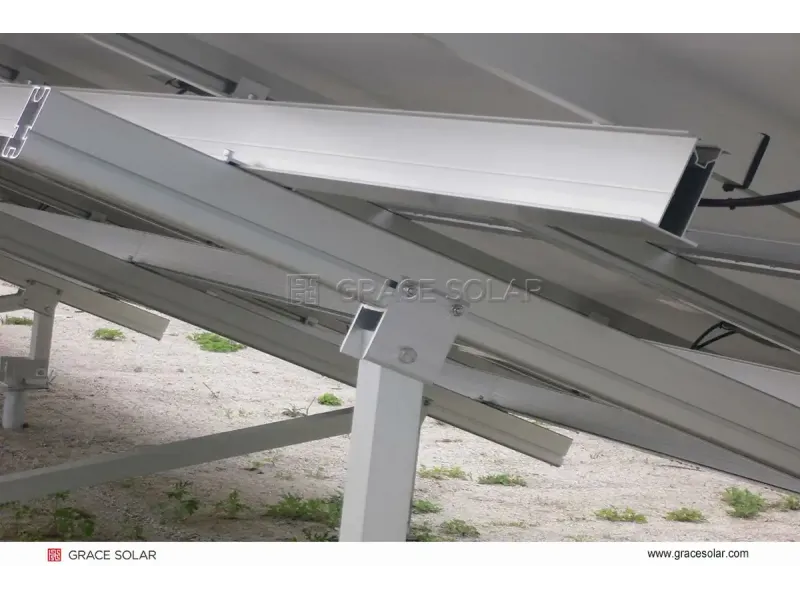
- Mounting Components: GS-7R/DR rails, pre-assembled splice kits, NEC 2023 compliant grounding, 55-year lifespan.
All products carry UL, TUV, CE, JIS, AS/NZS1170 certifications and a 10-year warranty, ensuring peace of mind for developers worldwide.
10. Future Outlook & Getting Your Customized Solution
By 2030, solar trackers will evolve into intelligent energy gateways, integrating with agrivoltaics (high-clearance designs) and using low-carbon steel. Leading manufacturers are already pioneering green manufacturing with large-scale factories and expert teams driving innovation.
Ready to maximize your solar project’s ROI? Grace Solar’s native-language engineers (EN/中文/日本語/ES/PT) deliver customized solutions in 30 minutes, including terrain analysis, cost optimization, and certification compliance. Contact us today to discuss your unique requirements.
Get Your Customized Solar Mounting Solution Now
Native-language Engineers (EN/中文/日本語/ES/PT) Deliver Solutions in 30 Mins:
/Aluminum%20alloy%20solar%20ground%20mount%20system%20for%20residential%20solar%20panels-400x300w.webp "A-Type Ground Mounting System - Landscape Placement (Aluminum Alloy)")
/Modular%20ground-mounted%20solar%20structure%20with%20corrosion-resistant%20coating-400x300w.webp "A-Type Ground Mounting System - Landscape Placement (Aluminum Alloy)")
/Adjustable%20tilt%20angles%20on%20Grace%20Solar%20landscape%20mounting%20system-400x300w.webp "VV-Type Ground Mounting System - Landscape Placement ( Aluminum alloy )")
/Commercial-scale%20solar%20farm%20using%20VV-Type%20landscape%20placement-400x300w.webp "VV-Type Ground Mounting System - Landscape Placement ( Aluminum alloy )")
/N-Type%20Aluminum%20Solar%20Ground%20Mounting%20System%20with%20Adjustable%20Tilt-400x300w.webp "N-Type Ground Mounting System - Landscape Placement ( Aluminum alloy )")
/Residential%20Ground%20Mount%20System%20with%200-60°%20Tilt%20Adjustment-400x300w.webp "N-Type Ground Mounting System - Landscape Placement ( Aluminum alloy )")
/W-Type%20aluminum%20solar%20mounting%20system%20structural%20detail-400x300w.webp "W-Type Ground Mounting System - Landscape Placement ( Aluminum alloy )")
/Ground%20screw%20foundation%20installation%20for%20Grace%20Solar%20racking-400x300w.webp "W-Type Ground Mounting System - Landscape Placement ( Aluminum alloy )")
/Adjustable%20solar%20ground%20mount%20system%20on%20snowy%20mountain%20with%2055%20Angle%20tilt_-400x300w.webp "Adjustable Ground Mounting System - Portrait Placement ( Carbon steel )")
/Engineer%20assembling%20Grace%20Solar's%20portrait%20ground%20mount%20in%20typhoon%20area_-400x300w.webp "Adjustable Ground Mounting System - Portrait Placement ( Carbon steel )")