Table of Contents
- 1. The Bottom Line: Ground Mount Solar Cost Overview
- 2. 7 Key Factors Influencing Your Final Price
- 3. Detailed Cost Breakdown: Where Does Your Money Go?
- 4. Ground Mount vs. Rooftop Solar: A Cost-Benefit Analysis
- 5. How to Reduce Cost & Maximize Your Investment
- 6. A Global Cost Perspective
For homeowners, farmers, and businesses with available land, ground-mounted solar panels present a powerful opportunity for energy independence and long-term savings. While often more efficient than rooftop systems, understanding the complete installation cost is crucial for making an informed decision. This comprehensive guide breaks down the expenses from a global viewpoint, highlighting how strategic choices—like partnering with an experienced manufacturer such as Grace Solar—can optimize durability, performance, and ultimately, your return on investment (ROI).
1. The Bottom Line: Ground Mount Solar Cost Overview
The total installed cost for a ground-mounted solar system varies significantly based on location, scale, and technology. In established markets like North America, a typical residential system ranges from $40,000 to $70,000 before incentives. For larger commercial or agricultural installations, costs can start from $150,000 and exceed $500,000.
A more precise and universal metric is the cost per watt ($/W). This standardizes comparison across different system sizes. For ground-mounted systems, this typically ranges from $2.50 to $3.50 per watt for standard fixed-tilt installations. Therefore, a 10 kW (10,000-watt) system would have a gross cost of approximately $25,000 to $35,000. It's critical to remember this is the price before applying any financial incentives, which can substantially reduce the net investment.
Quick Tip: Always ask for the cost per watt when comparing quotes. It immediately tells you the price efficiency of different proposals, regardless of total system size.
2. 7 Key Factors Influencing Your Final Price
Your unique project details will determine where you fall in the cost range. Here are the primary variables that shape the final quote:
1. System Size & Energy Needs
Larger systems have a higher total cost but often benefit from a lower cost per watt due to economies of scale. Your past electricity bills (annual kWh consumption) are the best guide for correct sizing to meet your energy goals.
2. Type of Mounting & Racking System
This is the most significant differentiator from rooftop solar and a major cost driver.
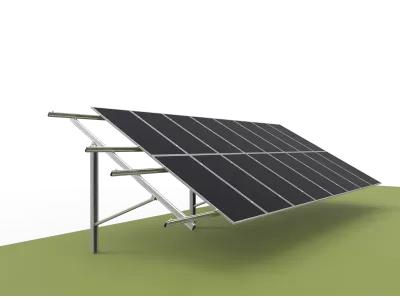
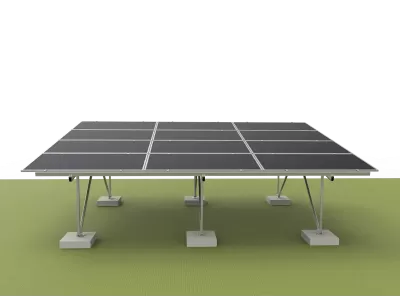
Fixed-Tilt Racking: The most common and affordable option. The structure is set at a fixed, optimal angle for the location. Explore standard ground mount racking solutions.
Single/Dual-Axis Tracking Systems: These advanced systems, like the GS-Light intelligent tracker from Grace Solar, follow the sun's path. They increase upfront cost by 15-30% but can boost annual energy yield by 10-25% or more, significantly improving payback time in regions with high solar irradiance.
3. Site Preparation & Terrain
Costs can escalate based on site conditions. Clearing dense vegetation, extensive land leveling, and especially trenching for underground wiring add considerable expense. Rocky or steeply sloped terrain requires more labor and specialized foundation solutions.
4. Foundation Type
The foundation ensures long-term stability. Traditional concrete piers are robust but labor-intensive. Modern ground screw or pile-driven foundations—a specialty in engineered systems—reduce installation time, minimize concrete use, and offer a more cost-effective and environmentally friendly alternative, especially for difficult soils.
5. Component Quality (Panels, Inverters, Racking)
High-efficiency panels and premium inverters cost more upfront but yield more power. The racking system is the project's skeleton. A robust, corrosion-resistant system engineered for local wind and snow loads—like those from Grace Solar, tested to international standards (UL, TUV, etc.)—prevents costly future repairs and ensures decades of reliable performance.
6. Labor, Permits & Local Regulations
Labor rates vary by region. Permitting, interconnection fees, and inspection costs are dictated by your local authority and utility company. Some areas have complex zoning laws that can affect array placement and increase soft costs.
7. Available Incentives & Tax Policies
This is where net cost can dramatically drop. Research national tax credits (like the 30% ITC in the U.S.), state/regional rebates, accelerated depreciation for businesses, and favorable net metering policies. These incentives can reduce your net system cost by 30% to 50%.
3. Detailed Cost Breakdown: Where Does Your Money Go?
Understanding the cost composition helps in evaluating quotes and identifying areas for potential savings or value-adding investments.
| Cost Component | Approx. Share of Total Cost | Details & Notes |
|---|---|---|
| Solar Panels | 20% - 30% | The heart of the system. Cost varies by efficiency (monocrystalline vs. polycrystalline), brand, and power output (watts per panel). |
| Mounting & Racking System | 20% - 35% | Includes all structural metalwork, tracking mechanics (if any), and the foundation. This is where ground mounts differ most from rooftop. Investing in a quality, certified system like those from Grace Solar ensures longevity. Don't forget necessary components & accessories. |
| Inverter & Electrical Balance of System (BOS) | 15% - 25% | Converts DC to AC power. Includes string/microinverters, wiring, combiners, disconnects, and the main service panel integration. |
| Installation Labor | 10% - 25% | Covers site prep, assembly, mounting, electrical work, trenching, and system commissioning. Complexity greatly affects this. |
| Soft Costs | 15% - 30% | Often overlooked. Includes engineering design, permitting fees, inspections, project management, sales tax, and installer overhead/profit. |
4. Ground Mount vs. Rooftop Solar: A Cost-Benefit Analysis
| Aspect | Ground-Mounted System | Rooftop System |
|---|---|---|
| Avg. Installed Cost ($/W) | Higher ($2.50 - $3.50+) | Lower ($2.20 - $3.00) |
| Energy Production Potential | Optimal (Perfect tilt/orientation, better cooling, optional tracking) | Limited by roof's angle, direction, shading, and temperature |
| Maintenance & Access | Easy and safe ground-level access for cleaning, snow removal, and inspection. | Requires roof access, can be difficult, dangerous, and incur additional costs. |
| Space Requirement & Flexibility | Requires dedicated land but allows for easy future expansion and optimal placement. | Utilizes existing roof space but is constrained by its size, shape, and future roof repairs. |
| Ideal Use Case | Properties with ample land, shaded/poorly oriented roofs, high energy demands, or desire for maximum production with tracking. | Homes with suitable, unshaded, and structurally sound roofs. |
5. How to Reduce Cost & Maximize Your Investment
Smart planning and partner selection are key to achieving cost-effectiveness and long-term value:
Prioritize Lifetime Value Over Upfront Price
A slightly more expensive, high-efficiency tracker system may generate far more electricity over 25+ years, offering a superior ROI than the cheapest fixed system. Calculate the Levelized Cost of Energy (LCOE) to compare long-term value.
Invest in Quality, Integrated Racking
The racking system is a long-term investment. Opt for systems from manufacturers with proven global experience and rigorous testing, like Grace Solar. A reliable system minimizes future maintenance, withstands extreme weather, and protects your entire solar asset.
Optimize for Installation Efficiency
Pre-assembled components and innovative foundation technologies (like ground screws) can drastically reduce on-site labor hours, a major cost component. Experience from large-scale global deployments shows this is a critical lever for controlling installed costs.
Secure Multiple Detailed, Comparable Quotes
Ensure quotes are itemized, specifying equipment brands/models (especially racking), labor breakdown, and projected energy output (kWh). Compare the cost per watt, warranty terms, and the installer's track record with similar ground-mount projects.
6. A Global Cost Perspective
While per-watt costs are a useful benchmark, final prices are deeply influenced by local markets:
North America & Australia: Mature markets with strong incentives but higher labor costs. Prices are often in the $2.50-$3.50/W range.
Europe: Diverse market; countries like Germany and Spain have competitive pricing and mature supply chains, while others may have higher costs.
Asia & Emerging Markets: Often have lower equipment and labor costs, potentially bringing per-watt prices down, though logistics and import duties can be a factor. This is where a global supplier's logistics network becomes an advantage.
Regardless of location, the principles of choosing durable equipment, efficient installation, and leveraging local incentives remain universally true for a sound investment. With projects successfully installed in over 100 countries, Grace Solar's solutions are engineered to meet diverse global standards and climatic challenges.
Final Thoughts
Investing in a ground-mounted solar system is a strategic decision that offers unparalleled flexibility, performance, and long-term energy security. By focusing on total lifetime value, selecting durable and intelligently engineered solar solutions, and thoroughly leveraging available incentives, you can ensure your system delivers clean, low-cost energy for decades. As a global leader committed to engineering excellence, Grace Solar designs every system with the mission to be "firm as rock," ensuring our partners worldwide achieve maximum and reliable returns from the sun.
Ready to evaluate your specific project? Start by gathering your land details and energy bills. Then, consult with a qualified installer who can provide a detailed assessment using high-quality, certified components to build a system that stands the test of time.
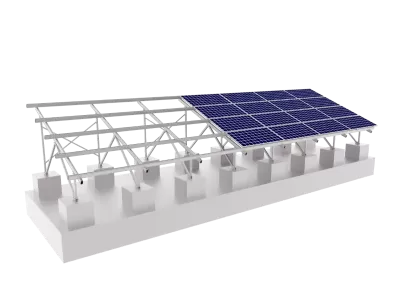
/Aluminum%20alloy%20solar%20ground%20mount%20system%20for%20residential%20solar%20panels-400x300w.webp "A-Type Ground Mounting System - Landscape Placement (Aluminum Alloy)")
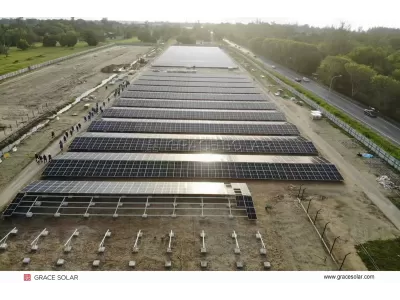
/Modular%20ground-mounted%20solar%20structure%20with%20corrosion-resistant%20coating-400x300w.webp "A-Type Ground Mounting System - Landscape Placement (Aluminum Alloy)")
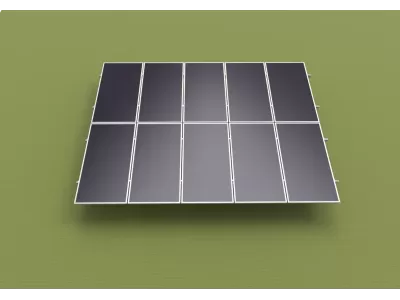
/Adjustable%20tilt%20angles%20on%20Grace%20Solar%20landscape%20mounting%20system-400x300w.webp "VV-Type Ground Mounting System - Landscape Placement ( Aluminum alloy )")
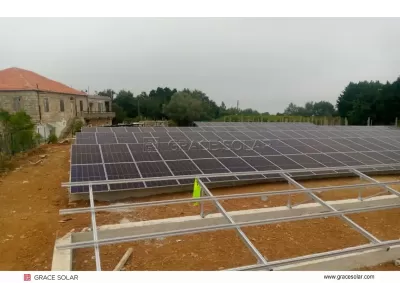
/Commercial-scale%20solar%20farm%20using%20VV-Type%20landscape%20placement-400x300w.webp "VV-Type Ground Mounting System - Landscape Placement ( Aluminum alloy )")
/N-Type%20Aluminum%20Solar%20Ground%20Mounting%20System%20with%20Adjustable%20Tilt-400x300w.webp "N-Type Ground Mounting System - Landscape Placement ( Aluminum alloy )")
/Residential%20Ground%20Mount%20System%20with%200-60°%20Tilt%20Adjustment-400x300w.webp "N-Type Ground Mounting System - Landscape Placement ( Aluminum alloy )")
/W-Type%20aluminum%20solar%20mounting%20system%20structural%20detail-400x300w.webp "W-Type Ground Mounting System - Landscape Placement ( Aluminum alloy )")
/Ground%20screw%20foundation%20installation%20for%20Grace%20Solar%20racking-400x300w.webp "W-Type Ground Mounting System - Landscape Placement ( Aluminum alloy )")
/Adjustable%20solar%20ground%20mount%20system%20on%20snowy%20mountain%20with%2055%20Angle%20tilt_-400x300w.webp "Adjustable Ground Mounting System - Portrait Placement ( Carbon steel )")
/Engineer%20assembling%20Grace%20Solar's%20portrait%20ground%20mount%20in%20typhoon%20area_-400x300w.webp "Adjustable Ground Mounting System - Portrait Placement ( Carbon steel )")