Table of Contents
- The Quick Answer
- Why the Price Difference? A Detailed Cost Breakdown
- Ground-Mount vs. Roof-Mount: A Detailed Comparison
- When is the Higher Cost of Ground Mount Justified?
- Your Decision-Making Guide
- Engineering Matters: The Role of a Quality Mounting System
- Frequently Asked Questions (FAQ)
The Quick Answer
Yes, ground-mounted solar panel systems typically require a higher initial investment than rooftop systems of equivalent size. Industry data consistently shows a premium of approximately 10% to 25% on average. This cost differential stems from the need for dedicated support structures, additional labor, and site work.
However, focusing solely on the upfront price tag is a short-sighted approach. For many property owners—whether residential, commercial, or agricultural—the enhanced energy production, easier maintenance, and superior system flexibility of a ground-mounted array can translate into a better lifetime Return on Investment (ROI) and greater long-term value. The "best" choice depends entirely on your specific property, energy goals, and financial calculations.
Why the Price Difference? A Detailed Cost Breakdown
Understanding why ground mounts cost more requires looking at the components and labor involved. As a leading manufacturer of solar racking systems, we see these factors in every project.
1. Structural & Material Costs
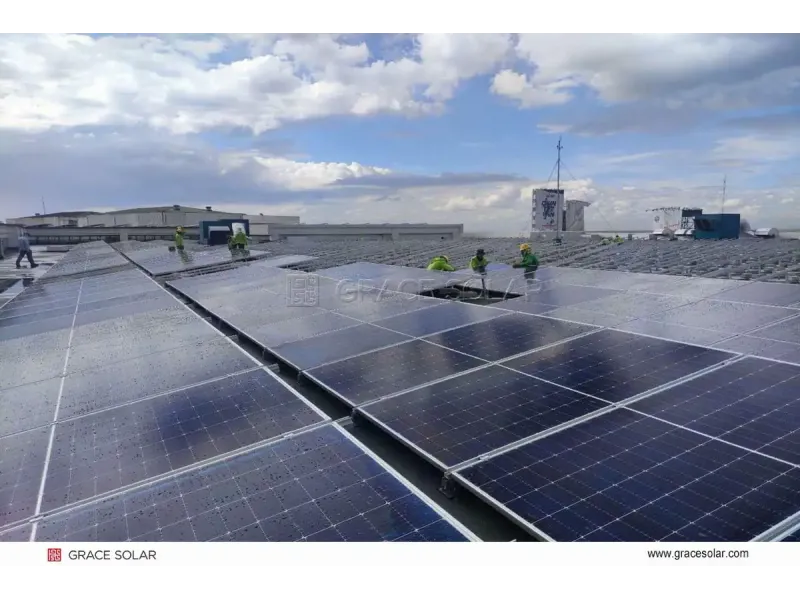
Rooftop Systems: Utilize the existing roof as the primary support structure. The racking is lightweight and designed to attach directly to the roof framing.
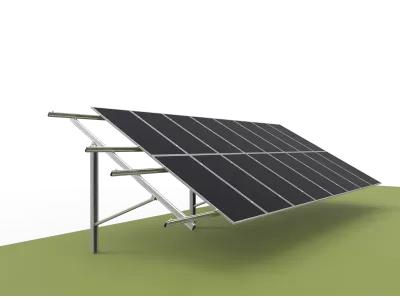
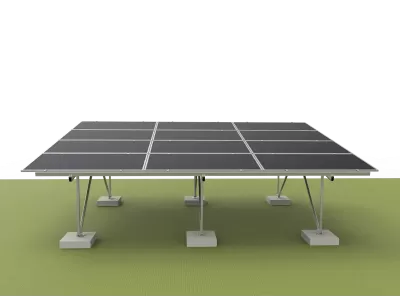
Ground-Mount Systems: Require a completely independent, engineered structure. This includes:
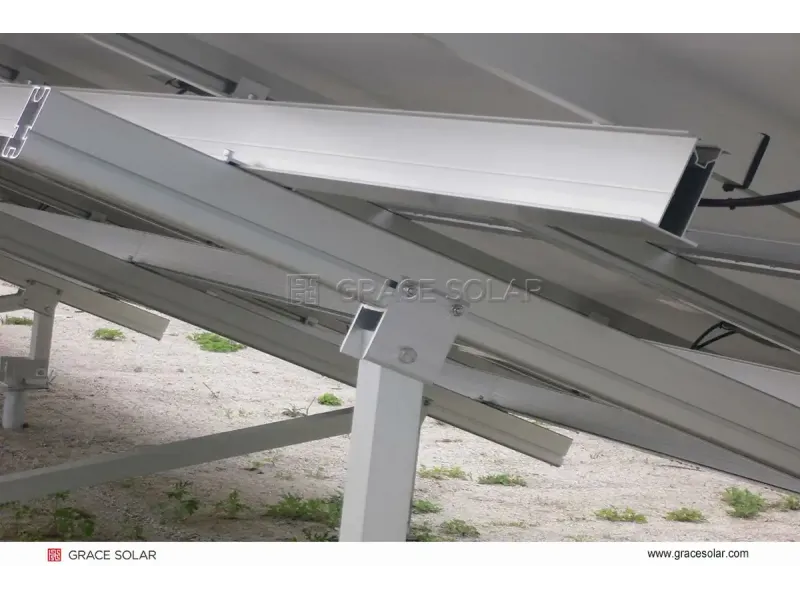
- Robust Steel Frames: Heavy-duty galvanized steel to withstand decades of environmental stress.
- Deep Foundations: Concrete footings, driven piers, or helical piles must be installed to provide a stable, non-shifting base, often requiring specialized machinery.
- More Hardware: Significantly more bolts, brackets, and rails are needed to create the freestanding array.
2. Labor & Site Work
This is where costs can vary significantly based on your land.
- Trenching & Wiring: Electrical conduits must be run from the ground array to the main utility connection point, involving digging long, deep trenches.
- Land Clearing & Grading: The site often needs to be cleared of vegetation, leveled, and prepared to ensure proper drainage and a stable base.
- Complex Installation: Erecting the structural framework and installing foundations is more labor-intensive than mounting rails on a roof.
3. Planning & Permitting
Local authorities often treat ground mounts as "new construction." This can trigger requirements for:
- Detailed structural and civil engineering drawings.
- Setback compliance from property lines.
- Additional environmental or zoning reviews, which can lengthen the approval timeline.
Ground-Mount vs. Roof-Mount: A Detailed Comparison
To make an informed decision, you must look beyond price. This table contrasts the key attributes of both systems.
| Factor | Ground-Mounted Solar | Roof-Mounted Solar |
|---|---|---|
| Avg. Upfront Cost (per watt) | $2.90 - $3.80 | $2.50 - $3.20 |
| Efficiency & Output | Optimal. Panels can be positioned at the perfect angle and direction (true south). Better cooling increases efficiency. Compatible with tracking systems. | Constrained. Limited by roof pitch, orientation, and shading. Can run hotter, reducing efficiency slightly. |
| Maintenance & Access | Easy. Simple to clean, inspect, and repair at ground level. Snow removal is straightforward. | Difficult. Requires safety equipment/professionals for cleaning, inspection, or repairs. Snow sheds naturally but can accumulate. |
| Flexibility & Expansion | High. System size is limited only by land. Easy to expand in the future. Independent of roof condition/life. | Low. Limited by available roof space. Expansion is usually not possible. Tied to roof's lifespan (may need removal for re-roofing). |
| Ideal For | Properties with ample land, poor roof conditions, high energy needs, or plans for future expansion. | Homes/businesses with suitable, unobstructed roofs where minimizing initial cost is a primary concern. |
When is the Higher Cost of Ground Mount Justified?
The extra investment in a ground-mounted system pays off in these common scenarios:
Scenario 1: Non-Ideal Roof Conditions
If your roof is shaded, faces north (in the northern hemisphere), is structurally weak, made of unsuitable material (e.g., slate, wood), or simply too small, a ground mount is not just an alternative—it's the only viable path to solar. Compromising on a poorly positioned rooftop system will yield less energy for decades.
Scenario 2: Maximizing Energy Production for High Demand
For all-electric homes, facilities with EV fleets, or agricultural operations with high power needs, energy output is king. A ground-mounted system can be optimized and sized to meet 100% of your demand. You can also integrate advanced technologies like the GS-Light intelligent tracking system, which can increase energy yield by 25% or more compared to fixed systems, dramatically improving payback time.
Scenario 3: Prioritizing Long-Term Ease & Flexibility
If you value easy maintenance, plan to expand your system later, or don't want to touch your roof for 30+ years, the ground mount offers peace of mind. Its accessibility lowers lifetime operational costs and hassle.
Your Decision-Making Guide
Follow these steps to determine the best solution for your property:
- Assess Your Property: Evaluate roof space, orientation, shading, and structural integrity. Then, evaluate available land, soil type, and sun exposure.
- Analyze Your Energy Profile: Review your past utility bills. Factor in future consumption increases (e.g., electric vehicle, pool, workshop).
- Get Detailed Quotes: Obtain professional quotes for both installation types from reputable installers. Ensure they include all site work, permitting, and hardware.
- Calculate Long-Term Value: Don't just compare total cost. Ask for projections of lifetime energy production (kWh) and Levelized Cost of Energy (LCOE). The system with the lower LCOE delivers cheaper power over its lifespan.
- Choose a Partner with Engineering Expertise: The quality and design of the ground mount racking system are critical for durability, wind/snow resilience, and ultimately, your ROI.
Engineering Matters: The Role of a Quality Mounting System
At Grace Solar, with over a decade of specialization in solar mounting, we've learned that the foundation of any successful solar project is a racking system engineered for reliability. Our mission is to "Mount every solar plant firm as rock," and this is especially crucial for ground-mounted arrays.
- Global Provenance: Our systems, supporting over 48GW globally across 100+ countries, are tested in every conceivable environment, from heavy snow loads to high-wind corridors.
- Certified Security: Products like our GS-Smart ground mounting system are backed by international certifications (UL, TUV, JIS, etc.) and wind tunnel test reports, providing the bankable confidence needed for large investments.
- Optimized for Performance: From fixed-tilt structures to smart tracking solutions, we design systems that do more than just hold panels—they position them to capture maximum energy, ensuring you get the fastest possible return on your investment.
Choosing a partner with deep engineering expertise in mounting components ensures your system is built on a foundation of quality, safety, and performance.
Frequently Asked Questions (FAQ)
Are ground-mounted solar panels more efficient?
Yes, they can be significantly more efficient. Because they can be oriented at the ideal angle and direction (True South in the Northern Hemisphere) and have better airflow for cooling, they often produce 5-20% more energy annually than a similarly sized rooftop system on a non-optimal roof.
How much land do I need for a ground-mounted system?
As a rough estimate, a typical residential system (about 10kW) requires approximately 500-700 square feet of land. Commercial systems require significantly more. The exact area depends on panel efficiency and the racking layout.
Do ground-mounted systems require more maintenance?
While they may be more exposed to dirt and debris, they are far easier to maintain because they are accessible. Simple cleaning with a garden hose or soft brush is easy. The ease of access often means maintenance is performed more regularly and at a lower cost than rooftop systems.
Can I install a ground-mounted system myself?
It is strongly discouraged. The installation involves heavy materials, electrical work, deep excavation, and precise structural engineering to meet local building codes and withstand weather events. Professional installation is essential for safety, performance, and warranty validity.
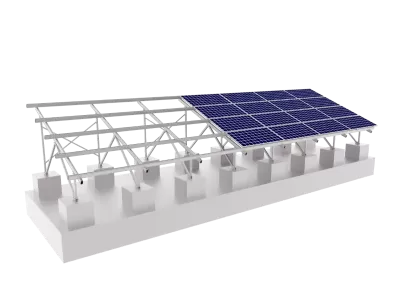
/Aluminum%20alloy%20solar%20ground%20mount%20system%20for%20residential%20solar%20panels-400x300w.webp "A-Type Ground Mounting System - Landscape Placement (Aluminum Alloy)")
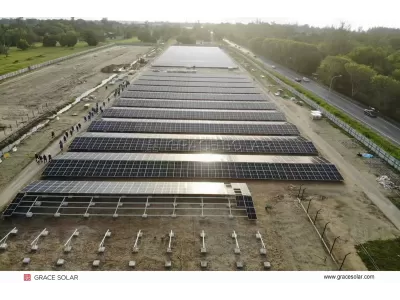
/Modular%20ground-mounted%20solar%20structure%20with%20corrosion-resistant%20coating-400x300w.webp "A-Type Ground Mounting System - Landscape Placement (Aluminum Alloy)")
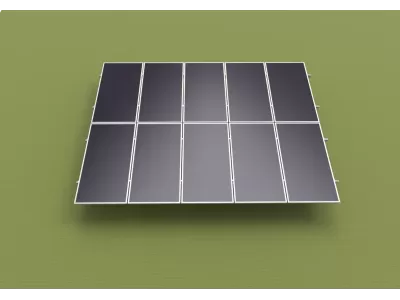
/Adjustable%20tilt%20angles%20on%20Grace%20Solar%20landscape%20mounting%20system-400x300w.webp "VV-Type Ground Mounting System - Landscape Placement ( Aluminum alloy )")
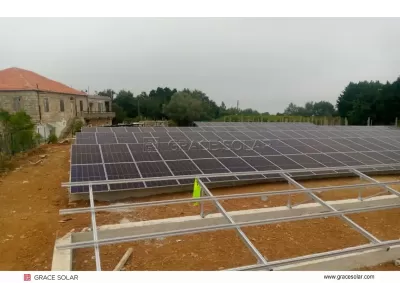
/Commercial-scale%20solar%20farm%20using%20VV-Type%20landscape%20placement-400x300w.webp "VV-Type Ground Mounting System - Landscape Placement ( Aluminum alloy )")
/N-Type%20Aluminum%20Solar%20Ground%20Mounting%20System%20with%20Adjustable%20Tilt-400x300w.webp "N-Type Ground Mounting System - Landscape Placement ( Aluminum alloy )")
/Residential%20Ground%20Mount%20System%20with%200-60°%20Tilt%20Adjustment-400x300w.webp "N-Type Ground Mounting System - Landscape Placement ( Aluminum alloy )")
/W-Type%20aluminum%20solar%20mounting%20system%20structural%20detail-400x300w.webp "W-Type Ground Mounting System - Landscape Placement ( Aluminum alloy )")
/Ground%20screw%20foundation%20installation%20for%20Grace%20Solar%20racking-400x300w.webp "W-Type Ground Mounting System - Landscape Placement ( Aluminum alloy )")
/Adjustable%20solar%20ground%20mount%20system%20on%20snowy%20mountain%20with%2055%20Angle%20tilt_-400x300w.webp "Adjustable Ground Mounting System - Portrait Placement ( Carbon steel )")
/Engineer%20assembling%20Grace%20Solar's%20portrait%20ground%20mount%20in%20typhoon%20area_-400x300w.webp "Adjustable Ground Mounting System - Portrait Placement ( Carbon steel )")